

The Two Sides of Your Cash Flow
Every business has money flowing in two directions: money coming in from customers, and money going out to suppliers, vendors, and service providers. In accounting, these flows are tracked through two specific accounts — Accounts Receivable (AR) and Accounts Payable (AP).
Understanding both, and actively managing them rather than letting them accumulate, is one of the highest-leverage financial disciplines a small business owner can develop.
Accounts Receivable (AR): Money Your Customers Owe You
Definition: Accounts Receivable represents the outstanding invoices your business has issued to customers for goods or services delivered, for which payment has not yet been received.
When you deliver a service and send an invoice with 30-day payment terms, the invoice amount moves from your revenue into AR. It stays in AR until the customer pays, at which point it becomes cash.
Why AR Management Matters
A business can be profitable on paper while suffering a severe cash flow crisis — if its customers aren't paying on time. This is extremely common in service businesses (consulting, construction, professional services) where invoicing on completion means waiting 30–60 days for payment on work already done.
Key AR metrics to monitor:
Days Sales Outstanding (DSO): (Accounts Receivable ÷ Annual Revenue) × 365. This tells you how many days, on average, it takes to collect payment after invoicing. Lower is better. Industry-standard DSO by sector:
- Professional services: 30–45 days
- Construction: 45–75 days
- Retail/e-commerce: Near zero (card payments at time of sale)
- B2B software: 30–45 days
AR Aging Report: The most important AR management tool. Shows all outstanding invoices sorted by age:
- 0–30 days: Current
- 31–60 days: Follow up
- 61–90 days: Escalate
- 90+ days: Collections or write-off consideration
Any invoice over 90 days without a clear resolution is a warning sign.
AR Best Practices
1. Invoice immediately. Don't batch invoices monthly if you can avoid it. Invoice the day a project completes or a deliverable is sent. Every day of delay on invoicing is a day of delay on payment.
2. Set clear payment terms. Net 15 is better than Net 30 for cash flow. Consider offering a 2% early payment discount (2/10 Net 30) for customers who pay within 10 days — many will take it.
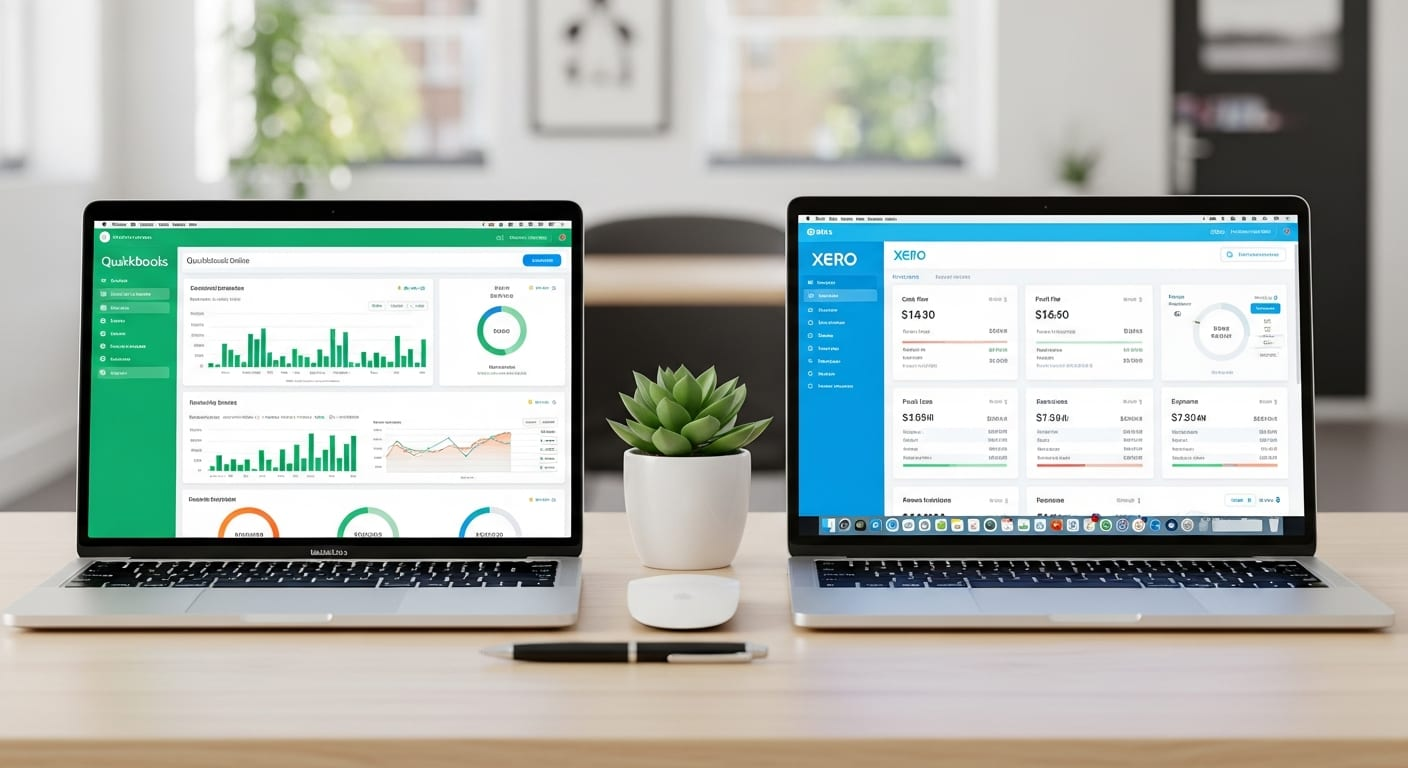
3. Send reminders automatically. Your accounting software (QuickBooks Online or Xero) can send automated payment reminders at 7 days before due, on due date, and 7 days after. Automate this.
4. Charge late payment interest. Include late payment interest (1.5–2% per month) in your standard terms. Many businesses don't enforce it, but having it in your terms creates leverage.
5. Review AR aging weekly. Don't let unpaid invoices quietly accumulate. A weekly 10-minute review of your AR aging catches problems before they become write-offs.
Accounts Payable (AP): Money You Owe Vendors and Suppliers
Definition: Accounts Payable represents the outstanding invoices your business has received from vendors and suppliers, for which you have not yet made payment.
When you receive an invoice for services rendered or goods delivered, it enters AP. When you pay the invoice, it leaves AP and becomes a cash outflow.
Why AP Management Matters
AP management has two competing goals:
- Pay on time to maintain vendor relationships and avoid late payment penalties
- Don't pay early unless there's a meaningful discount — holding cash as long as legitimately possible improves your working capital
A business that consistently pays vendors late damages its supplier relationships — vendors will eventually require upfront payment, which is devastating to cash flow. A business that pays too eagerly misses the opportunity to use cash productively in the interim.
AP Best Practices
1. Enter invoices immediately when received. The moment a vendor invoice arrives, enter it into your accounting software. This gives you an accurate view of what you owe and when it's due.
2. Set up a payment schedule. Process AP payments on a fixed schedule (weekly or twice-monthly) rather than ad hoc. This creates discipline, reduces missed payments, and lets you batch payment runs efficiently.
3. Take all early payment discounts. If a vendor offers 2/10 Net 30 (2% discount for paying within 10 days), almost always take it. A 2% discount for 20 days of early payment annualizes to about 36% return — far better than any other use of that cash.
4. Negotiate payment terms proactively. If you have good relationships with suppliers, ask for longer payment terms. Extending from Net 30 to Net 45 or Net 60 improves your working capital without any cost.
5. Never pay invoices that haven't been received and verified. AP fraud involves creating fake vendor invoices. Implement a simple two-person approval process — the person who approves payment should not be the person who enters the invoice.
The Cash Conversion Cycle: How AR and AP Connect
The Cash Conversion Cycle (CCC) is the number of days between when you pay your suppliers and when you collect from your customers:
CCC = DSO (days to collect from customers) − DPO (days you take to pay suppliers)
A lower (or negative) CCC means you collect before you pay — the ideal. Negative CCCs are common in retail (paid immediately by card, pay suppliers on Net 30 terms).
A high CCC means you're effectively financing your customers — paying suppliers upfront while waiting weeks or months for customer payment. This is where businesses run into cash flow problems despite strong revenue.
Improving your CCC:
- Reduce DSO (collect faster from customers)
- Increase DPO (pay suppliers later, within terms)
- Both simultaneously: issue invoices immediately, pay suppliers at day 29 of Net 30
AR and AP in Your Monthly Financial Close
At North Ledger, AR and AP reconciliation is a core part of every monthly bookkeeping close:
- AR: We reconcile the AR balance on your balance sheet to your actual open invoices, flag aging invoices for follow-up, and record any bad debt write-offs
- AP: We enter all vendor invoices, reconcile AP to vendor statements, and confirm all payments are correctly recorded
The result is an accurate balance sheet and a cash flow picture you can actually rely on.
If you're not currently getting this level of rigor in your monthly close, let's talk about what's possible.
Further Reading
- The 3 Financial Reports Every Small Business Owner Should Review Monthly: AR and AP are key line items in both the balance sheet and cash flow statement — here's how to read them together.
- Bookkeeping for E-Commerce Businesses: E-commerce platforms complicate AR through net payouts and chargebacks — see how multi-channel reconciliation works.
- Catch-Up Bookkeeping: What to Expect: Unmanaged AP and AR are often the messiest part of a catch-up engagement — here's what the cleanup process looks like.