
The Wayfair Ruling Changed Everything for Canadian Sellers
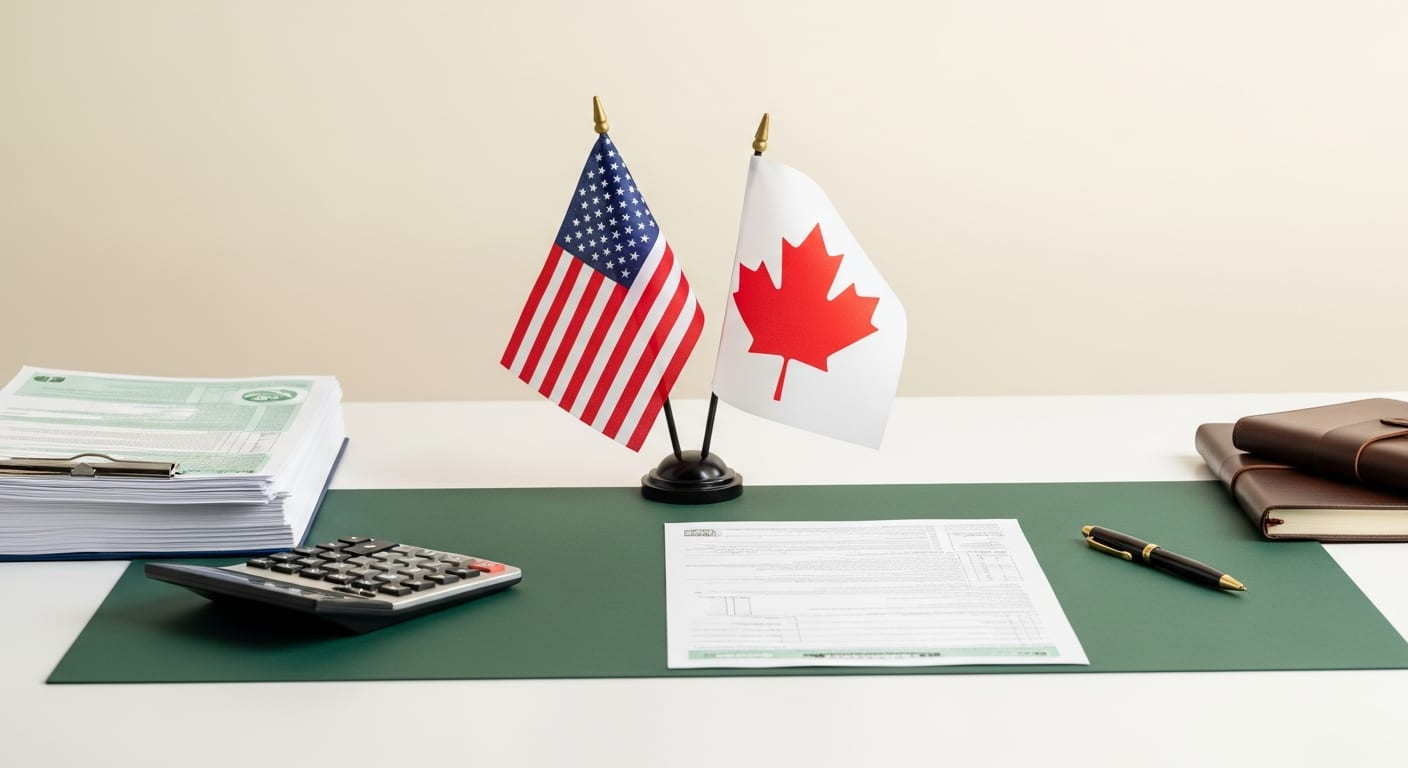
If you run a Canadian business that sells to American customers — through an e-commerce store, SaaS subscription, digital downloads, or professional services — you may have a US sales tax obligation that's costing you in penalties without you even knowing it.
The rules changed fundamentally after the 2018 South Dakota v. Wayfair Supreme Court decision. Here's everything you need to know.
What Is Economic Nexus?
Before Wayfair, US sales tax only applied if your business had a physical presence in a US state — an office, employee, warehouse, or trade show booth. Cross-border Canadian sellers were largely exempt.
After Wayfair, that changed entirely. Now most states use economic nexus rules: if you exceed a revenue threshold or transaction count in a state within a calendar year, you're legally required to register for that state's sales tax, collect it from customers, and remit it to the state — even if you have no US physical presence whatsoever.
The most common threshold: $100,000 USD in annual sales or 200 separate transactions within a single US state.
Which States Have Sales Tax?
As of 2024, 45 US states (plus Washington DC) impose a sales tax. The five exceptions are:
- Alaska (allows local jurisdictions to impose sales tax — not fully tax-free)
- Delaware
- Montana
- New Hampshire
- Oregon
If you sell nationwide, you may ultimately owe sales tax to dozens of states simultaneously.
What Types of Sales Are Taxable?
Whether you owe sales tax depends heavily on what you sell:
| Product/Service Type | Generally Taxable? | |---|---| | Physical goods shipped to the US | Yes, in most states | | SaaS / cloud software | Yes in ~25+ states, varies widely | | Digital downloads (music, ebooks) | Yes in many states | | Professional services | Often no, but varies by state | | Consulting fees | Generally exempt |
Software as a Service is one of the most complex areas — New York, Texas, and Pennsylvania treat SaaS as taxable; Florida and California do not (as of 2024). The rules are constantly evolving.
The Four-Step Compliance Path
Step 1: Track your US revenue by state Your payment processor (Stripe, Shopify Payments, etc.) can typically report revenue by customer location. Start tracking this immediately.
Step 2: Identify where you've crossed the threshold Once you hit $100,000 USD in sales or 200 transactions in any state, you have a nexus obligation. Use software like Avalara or TaxJar to monitor thresholds automatically.
Step 3: Register in triggered states Each state has its own registration process. Most are done online through the state's Department of Revenue website. You'll receive a sales tax permit number.
Step 4: Collect, file, and remit Once registered, you must collect the correct sales tax rate from customers (which varies by state, county, and city), file returns on schedule (monthly, quarterly, or annually based on volume), and remit what you've collected.
What Happens If You Don't Comply?
States actively audit e-commerce sellers, and they share data. Penalties for non-compliance include:
- Back taxes on all uncollected sales tax going back to when you first crossed the threshold
- Interest on unpaid amounts (typically 10–25% annually)
- Penalties of 10–25% on top of the outstanding balance
- In extreme cases, banking and payment processor holds
How North Ledger Helps
Our team monitors your US sales by state on a rolling basis, alerts you when you're approaching nexus thresholds, coordinates registration across triggered states, and works with your preferred tax software (Avalara, TaxJar, or QuickBooks Sales Tax) to automate collection and filing.
For cross-border businesses, navigating both Canadian GST/HST obligations and US state sales tax simultaneously is one of the most complex compliance challenges in small business finance. It's our specialty.
Book a free consultation to review your current US sales exposure.
Further Reading
- Complete Guide to GST/HST for Canadian Small Businesses: Canada's other major indirect tax — registration thresholds, ITCs, QST, and CRA filing requirements.
- Bookkeeping for E-Commerce Businesses: Multi-platform sellers face layered Canadian and US tax complexity — here's how to handle both correctly.
- Year-End Bookkeeping Checklist for Canadian Small Businesses: GST/HST reconciliation is a key year-end step — see the full checklist.