
Why Your Bank Balance Is Lying to You
Checking your bank account tells you one thing: how much cash you have right at this moment. It tells you nothing about whether your business is profitable, whether you're owed $40,000 in unpaid invoices, whether your margins are quietly shrinking, or whether you're about to run out of cash in 45 days despite a positive bank balance.
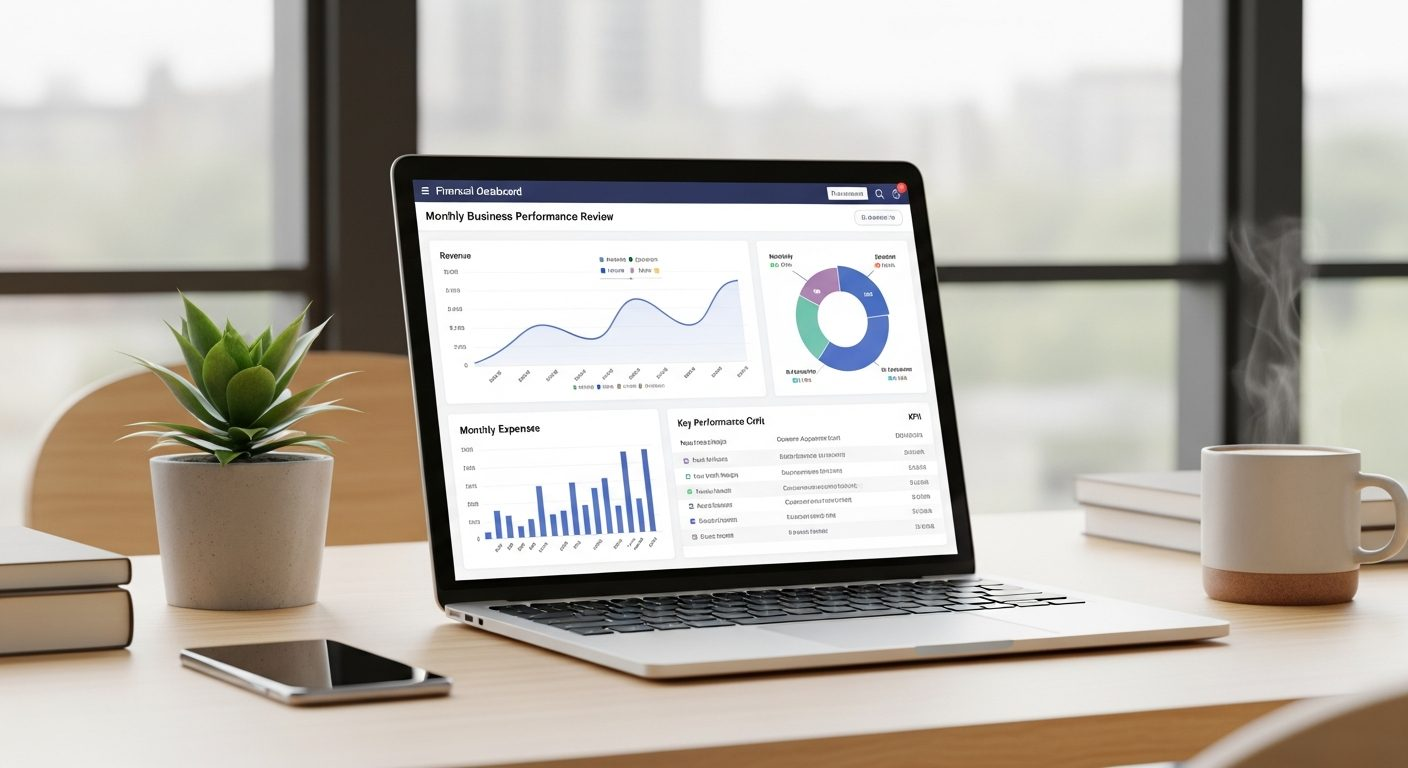
For that clarity, you need financial statements — reviewed consistently, every month. Here are the three reports you need and exactly what to look for.
Report 1: The Profit & Loss Statement (Income Statement)
What it shows: Revenue, expenses, and net profit or loss over a specific period — typically the current month and year-to-date.
What to look for:
Revenue trend: Is revenue growing, flat, or declining compared to the same month last year? Month-over-month comparisons are useful, but year-over-year comparisons remove seasonality.
Gross margin: (Revenue − Cost of Goods Sold) ÷ Revenue. Is your gross margin consistent? A shrinking gross margin often signals pricing pressure, supplier cost increases, or a mix shift toward lower-margin products.
Operating expenses by category: Which expense lines are growing faster than revenue? A few common culprits: software subscriptions that accumulate over time, payroll costs that outpace revenue growth, or marketing spend with declining returns.
Net margin: Healthy small businesses typically run 10–20%+ net margin depending on industry. Service businesses should be higher; retail and manufacturing lower.
Red flags to investigate:
- One-time revenue items masking a weakening underlying business
- Gross margin below industry average for your sector
- Any single expense category growing more than 20% year-over-year without a clear explanation
Report 2: The Balance Sheet
What it shows: A snapshot of everything your business owns (assets), owes (liabilities), and the equity in between — at a specific point in time.
What to look for:
Accounts receivable aging: If accounts receivable is growing faster than your revenue, you have unpaid invoices accumulating. Pull the AR aging report alongside your balance sheet — any invoices over 60 days old need immediate follow-up.
Cash and cash equivalents: Is your cash trending in the right direction? A business can be profitable on paper while running out of cash due to slow collections or large capital purchases.
Credit card and LOC balances: High revolving credit balances are a warning sign. If you're carrying credit card debt month-to-month as a business, the interest costs are eroding your profitability silently.
Owner's equity trend: Is equity (assets minus liabilities) growing over time? This is the simplest measure of whether you're building value or depleting it.
Red flags to investigate:
- Accounts receivable growing faster than revenue (collection problem)
- Negative equity (liabilities exceed assets — technically insolvent)
- Large unknown liabilities (accruals that haven't been invoiced yet)
Report 3: The Cash Flow Statement
What it shows: Where cash actually came from and where it went during the period — explaining the difference between your profit on the P&L and the actual change in your bank balance.
This is the most misunderstood statement and arguably the most important. Profitable businesses run out of cash. It happens constantly. The cash flow statement is the early warning system.
Three sections to understand:
Operating cash flow: Cash generated by your core business activities. This must be positive for a sustainable business. If your P&L shows profit but operating cash flow is negative, you have a receivables problem, inventory build-up, or timing issue that needs attention.
Investing cash flow: Cash spent on or received from assets — equipment purchases, vehicle payments, security deposits. Negative investing cash flow isn't necessarily bad — it often means you're investing in growth.
Financing cash flow: Cash from loans taken out or repaid, shareholder contributions or withdrawals, line of credit changes.
The key formula: Opening Cash + Operating CF + Investing CF + Financing CF = Closing Cash. If this doesn't reconcile to your actual bank balance, something is miscategorized.
Red flags to investigate:
- Positive net income but negative operating cash flow (receivables or inventory issue)
- Consistently borrowing (positive financing CF) to fund operations (negative operating CF)
- Cash runway under 60 days with no credit facility available
How to Make These Reports Actually Useful
The single most important thing you can do with these reports is review them consistently, at the same point every month, and compare them to the prior period.
A single month of financials tells you very little. Twelve months of consistent data tells you a story — where you're growing, where costs are creeping, whether you're on track, and where to focus your attention.
At North Ledger, every client receives these three reports by the 15th of the following month, delivered with a brief plain-language summary that explains what the numbers mean for their specific situation — not just the raw data.
If you're not receiving this level of financial visibility from your current bookkeeper, let's talk.
Further Reading
- Accounts Payable vs. Accounts Receivable: A deeper look at the two cash flow accounts that drive your balance sheet — and how to manage them actively.
- When Should a Startup Hire a Bookkeeper?: If these reports aren't being prepared for you monthly, these six signals mean it's time to get help.
- Year-End Bookkeeping Checklist for Canadian Small Businesses: Monthly discipline throughout the year makes December close routine instead of stressful.